
Once, as part of therapy for her arachnophobia, Genevieve Murphy had to touch a spider and let it crawl across her hand. In doing so, the Scottish-born, Amsterdam-based composer and performance artist developed a sense of empathy for something she had previously considered a monster. ‘When I realised this’, she told the Dutch journalist Sophie Smeets in 2020, ‘I realised that empathy is about learning patterns and the passing of time. It isn’t something that is or isn’t there, but sometimes we have to make an effort to understand and get to know another person.’
Empathy has long been central to Murphy’s work. She is particularly fascinated by situations of psychological distress or physical impairment, where misunderstandings and misreadings can make it hard for empathy to take root. Her work seeks to challenge that selectivity: how we can empathise easily with some people, while others we feel we must push away, like the objects of our phobias.

By incorporating her own experiences as material or inspiration into these examinations, Murphy leads her work along challenging paths between curiosity and anxiety, and towards the unknown. In the monodrama Something in This Universe (2018), for example, the music emerges out of the routines and chaos of an obsessive-compulsive disorder. In 2020’s I Don’t Want to Be an Individual All on My Own, she draws on memories of a childhood birthday party and her brother’s autism. And in another solo theatrical work, At the Spot Where I Find Myself (2022), issues around identity, privacy and isolation born out of the experience of pandemic lockdown are examined under an uncompromisingly intimate spotlight. Finally, a commission from Australia’s Ensemble Offspring gave Murphy a reason to explore her fear of spiders in 2019’s They Move Differently Here, which counterpoints recordings of conversations with her therapist against music that taps and prickles like arachnid feet across your skin.

It is easy too, to see how empathy – in Murphy’s distillation as pattern-learning plus time – can be a source for musical form. Going back at least to the open-form compositions of Cornelius Cardew and Christian Wolff of the 1960s, the listening scores of Pauline Oliveros and the large ensemble improvisations of groups associated with Chicago’s AACM, experimental music has been fascinated by the possibilities that can arise from processes of listening, attuning and responding in musically productive relationships. Many of Murphy’s recent works transpose the learnings of that heritage into concerto-like forms in which she features as a soloist, often on her childhood instrument, the bagpipes, to articulate and explore the physical impossibility – and musical possibilities – of true connection between the individual and the collective.
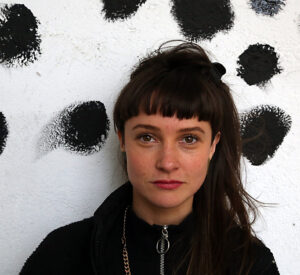
Photo Credit © Wikimedia Commons
One such work is Together We Feel and Alone We Experience, which will receive its UK premiere at hcmf// this year. For most of its thirty-five minutes, Murphy’s instrument is a shadowy, but continual presence, as the members of the Orchestra of New Creations, Experimentations and Improvised Music (ONCEIM) attempt (and variously and interestingly fail) to ‘become bagpipe’. As the musicians, guided by conductor Frédéric Bondy, strive to bring into being the pipes’ unique timbre and tonal and dynamic persistence, the music moves in large, self-organising and self-dispersing waves of attempted attunement. Only towards the end does it become possible to judge the players’ success, but in a sense that is not the point: rather, by highlighting the illusory ideal of shared sonic experience, Murphy brings to the fore the urgency of empathy as a means of creating connection.
Profile by Tim Rutherford-Johnson
Tickets for ONCEIM’s performance of Christian Marclay’s Constellation and Genevieve Murphy’s Together We Feel And Alone We Experience are now on sale here.