
Nicholas Moroz is having fun. Over the weekend, his new piece The Holy Fool got its premiere. Written for trombone, voices and strings, and performed by frequent collaborative partner Sebastiaan Kemner in Rotterdam, it takes his sound as far away from home as it’s ever been. For a long time, Moroz has been writing music with a deft technical touch, showcasing an extraordinary ability to create pieces that feel well and truly crafted – but in recent years, things have changed a bit. There’s a new side to Moroz’s music, a more open approach he describes as ‘dynamic’, and ‘playful’, even ‘emotional’. Talking about The Holy Fool, he invokes a new word: ‘whimsical’.
As I speak to him, Moroz is just exiting the fog of writing the piece, and though it was a massive undertaking, he feels joy running through it: ‘The Holy Fool is a reflection on what I like, in a way. It combines all different kinds of music and listening, rather than making a piece that does one thing’. It’s indicative of how Moroz has moved on, just a little, from the ideas that appealed to him as an emerging composer. He’s less interested in fitting under umbrellas like abstraction or construction, and has less reverence for the wholeness of a piece, no longer feeling the need to create from the parts to the sum. It doesn’t mean that his holistic touch is absent from new pieces, just that there’s new forms of expression to be found in them. Pieces like Her still singing limbs are filled with little declarations, Moroz playfully intertwining moods that clash while coalescing. An ethereal wave of electronics shifts amongst raging trombone stabs, one side of the piece pointing out the other. It fits together like a dream, making sense with an assembly of different logics, put upon one another.
In much of his music, Moroz is manipulating the timeflow, trying to catch the listener at different speeds. He likes to accelerate at full pelt, and from a point of languishing stillness; sometimes, he’ll go about it the other way. His pieces can feel like sensory paradoxes, appearing fatally dormant before introducing rhythmic rushes of sound, or melodies that seem to talk their way out of stasis. Though there’s no real holding material to it, no sustained drone in the background, 2019’s Intralatent feels like a good example. The centre of the piece is a well-placed stillness, one that performers GBSR Duo seem to be constantly interrupting. At times, the piano-percussion duo fall under the piece’s spell, sinking into the silence with fatigued timbral ambiences. At others they seem to break it, taking it completely off course, out of its repetitive state and into something haphazardly free.
There’s a sense, with his work, that Moroz is leaving the listener in limbo, setting them down for a long and wandering wait. In Unhintergehbar, the changes he makes are mere sparks, sudden moaning strings that break through the gorgeous harmonies playing on repeat. I’m not sure that I could tell you for sure, but the piece seems to shift rhythm in its final third, not by force but in a state of unravelling. It’s not sudden, but it is decided: at some point, you’ll find yourself somewhere you weren’t. Which is what Moroz wants: ‘I like settling into a slow spiral, and for a while, only for it to suddenly whip up. It’s these gear shifts in other people’s music that leave me with a genuine sense of flight or weightlessness’. Listening to a Moroz piece comes with an unforeseen whiplash – a moment where you’ve been invisibly shifted. ‘I have this image, like in Roadrunner, with Coyote going over the cliffedge – running on thin air until you suddenly realise you’re there, and you plummet’.
Moroz credits his music colleagues for helping him embrace a more instinctual writing style, to realise ‘that it’s fun to have fun’. But he was always bound to go in this direction; as both a performer and curator in this world, he’s become over-exposed to ‘the perfect piece’ that musicians want to write, the one where everything has to fit into place, artificially crammed into the right and proper dimensions of new music. He works in a genre with a lot of unspoken prerequisites: there are styles, and like a character creation screen, you pick one and follow it through. ‘The big problem with this whole field, especially at the institutional level, is that it’s so formalised and mechanised, from conservatoire to orchestra. Most people – composers and musicians – are just trying to fit into a box and stay there. Boxes are normal and necessary of course, but with my own programming I like to try to make a patchwork of connections, between composers, ideas, styles, while leaving the audience enough space to make up their own mind, and to experience the music on their own terms.’
That curation I mentioned comes in the form of Explore Ensemble, the music group Moroz performs in and also serves as the director of. Founded in 2012 by Moroz and Arne Gieshoff, the group has been a different kind of creative undertaking, immersing Moroz in a completely different part of music-making. The group exude a frankly disconcerting amount of energy for what they do, and have been working non-stop since its inception on spotlighting the composers they care about. They’ve just double-dropped two new recordings on Another Timbre, both dedicating space to composers with completely different styles – their performances on Summer honour the soft timbre and slow pace of James Weeks’ music, while Me Hollywood honours the playful, often wonky brilliance of Oliver Leith. That’s some serious range – but If it speaks to Explore, they’re in.
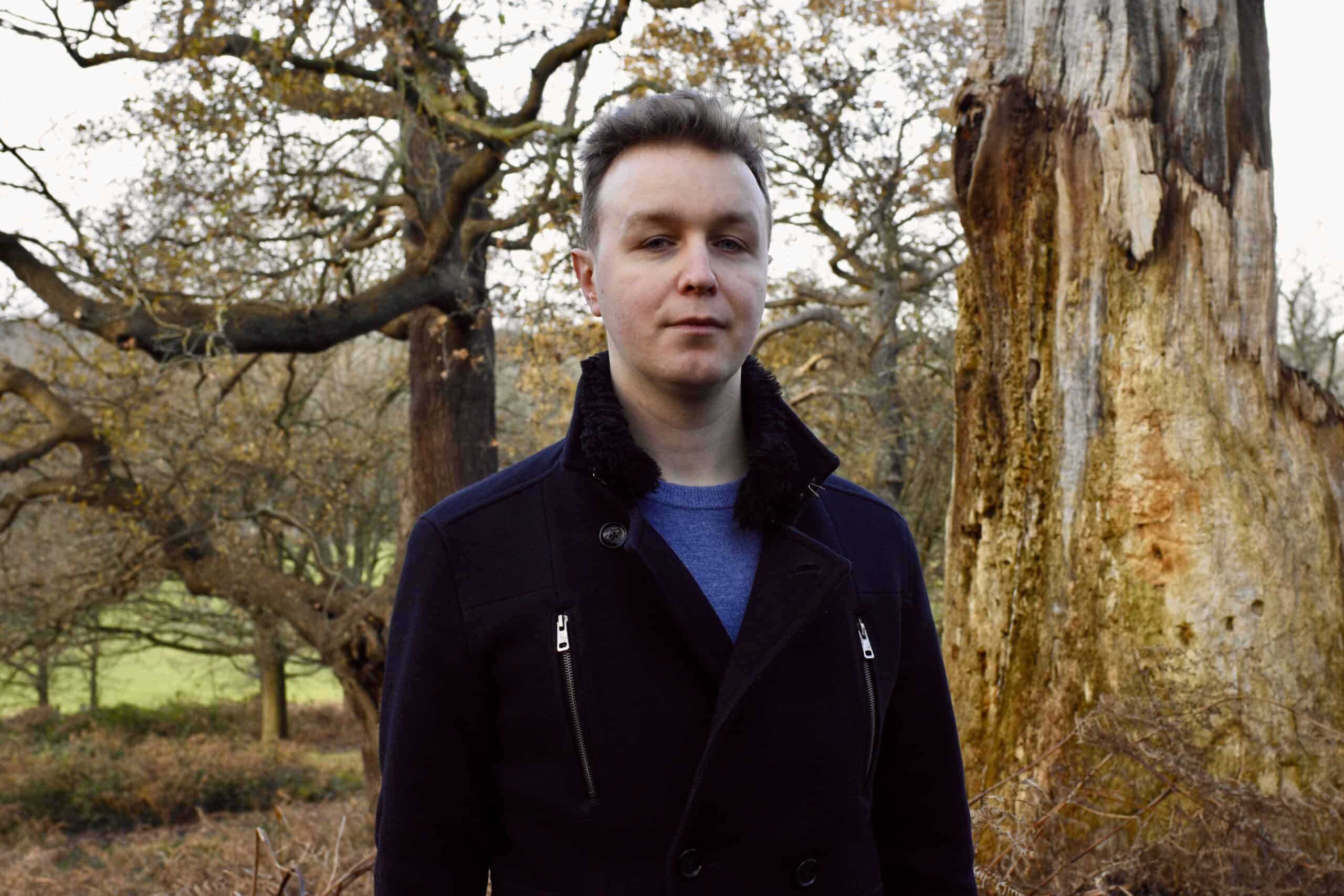
Photos by Francesca Spencer
The last five years have been revelatory for Explore, with concerts and commissions coming in at a rapidly increasing rate. A mainstay of hcmf//, their most recent performance at the festival was signature of the group, an explanation of all the things they do. Performing live for BBC Radio 3, they showcased three pieces detached from any expected musical aesthetics, all of them feeling incredibly specific to their composer. In fact, the pieces all carried their own niche. Oliver Leith’s ‘Truman Show tribute’ Me Hollywood straddled the line between absurd and pretty; Joanna Bailie’s piece Dissolve was a mysterious exploration of nostalgia and memory, written in the particular musical language only she can write in; Lawrence Dunn’s piece Sentimental Drifting Music was a stunningly warm piece of music, so rarely heard on programmes like these.
Explore is indicative of where Moroz’s interests lie: he’s interested in artists who can truly write with abandon, and has identified a common ground between composers and electronic producers. ‘When we’re talking about, as an art form, keeping it relevant to contemporary culture, that’s happening in the electronic and experimental space’. There’s crossover, of course, and Explore are investigating it – right now, their bills seem to be focused on truly egalitarian programming, working through the grassroots of the scene to bring up new composers and celebrate the vast possibilities of what a contemporary piece can sound like.
Moroz’s composing and curating seem linked up, in this way; there’s an effort being made, in both, to trust the instincts that come to you, rather than trading in the dogma of Doing It Right. ‘I think again, that’s one of the neat things about Explore – the USP of the group is that we’re not just another contemporary music group that’s churning through what’s popular at the moment. We want to cultivate our own identity, and create music, performances, and relationships that are special, long-lasting, and worth repeating.’ He’s well on his way, having turned towards a sound with its own weirdness, ticking on its own time.