
On exploring my identity through punk, noise and drone: how embracing my mixed race heritage has changed the faces of my idols, inspirations and output.
Between the ages of five and eleven, I was always one of two mixed-race kids in my year at primary school. Although racial identity and the nuances of coming from a mixed racial background wasn’t something that I was yet able to contextualise or unpack at that age, it was having an effect on me.
I was probably not fully conscious of it at the time, but I’m not sure it was a coincidence that the only other mixed-race kid in my year also happened to become my best friend. In so many ways we were total opposites: he was athletic, sporty and alpha-male; I, in contrast, was into drama, music and had no issue in dressing up in my mum’s clothes. Still, we were inseparable through these early years.
My best friend – let’s call him Jeff – was darker skinned than me: I am, in fact, quite fair skinned; some would say, even, “passing”. Growing up, Jeff and I were both massive Arsenal fans and on our lunch breaks or after school we would regularly play football together, each pretending to be our favourite Arsenal players. He was always Ian Wright or Patrick Vieira because they were the most prominent black players at Arsenal at the time and as such they were the easiest for him to relate to. I, on the other hand, found it much harder to pick, I just didn’t think anyone ‘looked’ that much like me. So I generally just picked Marc Overmars because I liked how fast he was.

As much as I wasn’t thinking critically or deeply about race at that age, I was still aware that I was half black but also that I didn’t look like the other black and mixed-race people I was related to, had encountered or was aware of – it was confusing and painful. On reflection, these early memories of my school years are where I believe the foundation and pattern of self doubt, shame and confusion began. It was my earliest memory of feeling an expectation of who I should be and of the decisions I should be making.
At various stages through life, it feels that we have our hands held out trying to clutch at predefined identities to claim and pull over us, for some as a shield, and others a blanket to comfort us, a moulded seat at the table. Imagining ourselves as our idols and heroes, allowing their status, attributes, facets and features to become ours for a short while, whilst our real self is paused in suspended animation. This can be soothing and empowering for some, but for me I could never quite find that idol which felt – or looked – like something I could grasp a hold of.
Looking at music, art, drama or sport, I could never quite find a fit. I observed an umbrella of blackness and brownness that my best friend and half of my family members could take shelter under which looked so comforting to me. Despite now recognising that these stereotypes and preconceived social roles are objectively detrimental social constructs, it was yet again another sense of feeling like I didn’t belong in one camp or the other, that there was a barrier I couldn’t cross and even if I could, the deep fear of rejection prevented me from trying.
During my early teens, my expression of self came through my hair – far and away my most defining feature when it comes to being half Jamaican – but I would get a lot of stick (almost exclusively from white folk) for how I looked. Between people poking fun at me for having an afro but looking white or for whom my hair would be a novelty, the ones betting me money my mum wasn’t black to those asking me if my white girlfriend minded mixing, getting turned down for jobs because of my hair or the people simply telling me to ‘cut my fucking hair’ whilst at the same time having hairdressers in my town telling me they couldn’t cut afro hair, none of this was conducive in my quest for understanding of how I should or could present in society.

Something I feel it is important to say here: it is always harder in our society to have darker skin. In having a fairer complexion I have a privilege that many of my relatives, friends and members of black community don’t. As hard as the abuse and questioning I received has felt on a personal level, it is nothing compared to the daily prejudice many dark-skin people experience and will continue to receive and which far outstrips my own.
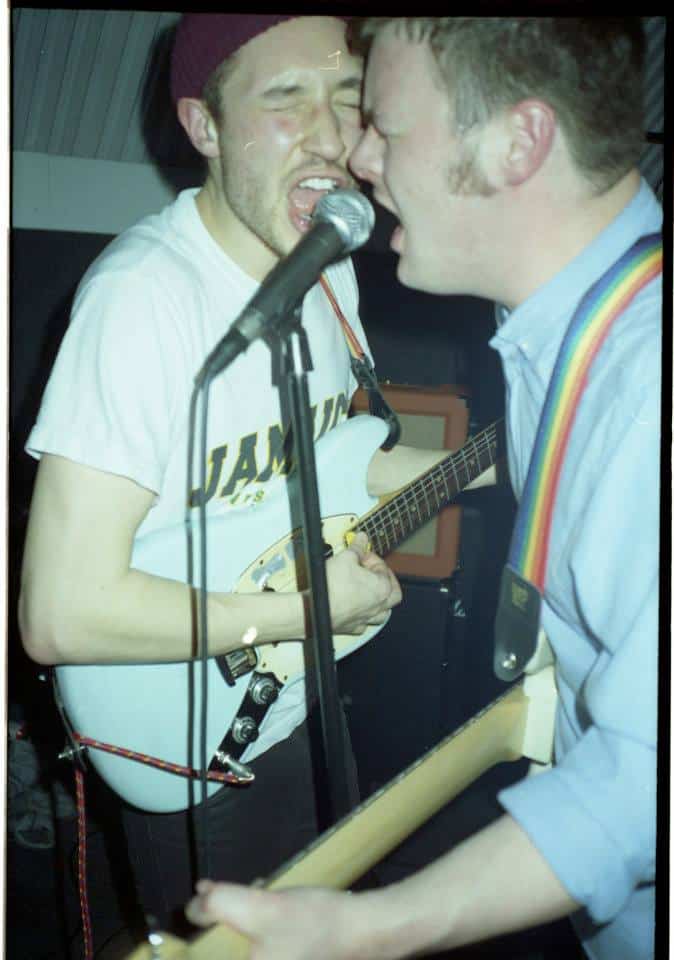
Through my late teens and early twenties, I spent a lot of energy trying to assimilate. I cut my hair off and kept it short, wore the clothes that I thought I should wear to fit in and generally tried to hide my blackness as much as possible so that people wouldn’t question me. I could go under the radar, incognito bi-racial. While I played in punk and garage rock bands, touring Europe & the US multiple times, releasing records and generally having a blast, there was always a disconnect between the music I was making and what I wanted to express. I was never eloquent enough with lyrics to be able to tell a story that was genuinely an expression of myself in my songs and never had the confidence to even try.
There were so many rules and blueprints that I had picked up along the way in how to be in a band, how to write songs, what to sing about, how to speak, topics to discuss in songs but still, it never felt quite right: it was just what I thought I should be doing to fit in that world. When I got the positive outcomes from following the narrative with tours and records coming out, I didn’t have the confidence to question the process much less my role or identity within it. But in the background there was always a bit of shame stemming from a sense that I wasn’t expressing myself in the way I should be, either creatively or physically.
I started to consider that I needed a shift, both creatively with my musical output but also in terms of how I approached expressing myself as an individual. Since hearing Lawrence English’s The Peregrine, a record that had a profound impact on me, I had been making experimental ambient and drone music on the side of my punk projects which was proving to be a liberating way of expressing myself musically – and above all, it was fun. For the first time in my adult creative life, I felt like there were no rules, no expectations; I was just focusing on the creative process and having as much fun as possible. This sense of freedom was the catalyst to me starting to question the way in which I should be expressing myself and changing the question to which ways I could be expressing myself, and finally I started to find a voice that was my own.
I was able to express moods and movements which felt personal but not literal, bringing in concepts of confusion, racial ambiguity and dissociation through compositions rather than lyrics. Through listening to artists like Leyland Kirby, Lawrence English, Basinski, Christina Vantzou, Chihei Hatakeyama, Alex Zhang Hungtai, Liz Harris, Visionist, Merzbow, Keiji Haino, Moor Mother and more, I started to build more sonic reference points that not only excited me but which felt open and free to interpretation. They posed questions to the listener, showed me that there was no right or wrong way to make music, listen to music, dress or express yourself. More even than the music, it was that mentality behind it that liberated me creatively – a liberation that I believe needed to happen before I could broach the subjects of personal and racial identity, as well as the expectations around these.
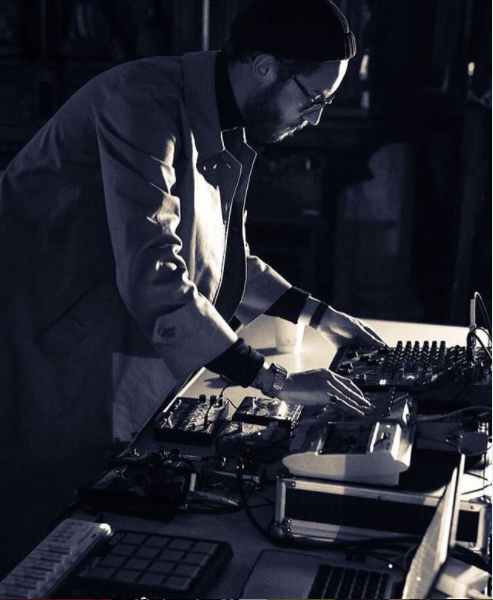
As much as I have been able to find a voice of my own through experimental music, the idea of being a person of colour not fully fitting within a music scene hasn’t altogether changed in the last few years. The communities and ecosystems are, to a degree, still predominantly white and male – as the line-ups and audiences of a number of experimental, noise or ambient shows I attend can very clearly attest to. It is a fact that I am always very aware of, and that can and have made discussions around race and identity still feel kind of tough. However, I have found a strong undercurrent of artists pushing back within their worlds, creating their own communities and making some absolutely incredible and expansive music in the process.
Obviously, this is not to say these artists and communities are non-existent in the punk world which has strong ties to anti-facism and anti-racism at its core, and which also has people pushing forward the conversations of race, gender and sexuality – I can think Rachel Aggs from Shopping or the team behind London’s Decolonise Fest to name a couple. However, I personally never had the confidence to try and curate my own existence within that world, as I came to it still projecting stereotypes onto myself, the ones that I was playing ‘white music’, that I had a role to play – and played it. On the other hand, experimental music could really mean anything to me when I was first introduced to it: Sun Ra, Pharoah Sanders, Ornette Coleman, etc. Whilst still an overwhelmingly white world it somehow carried less of a racial stereotype – at least in my mind – and that helped me in finding a language within this music scene that was free and with which my identity didn’t feel as forced as it used to.
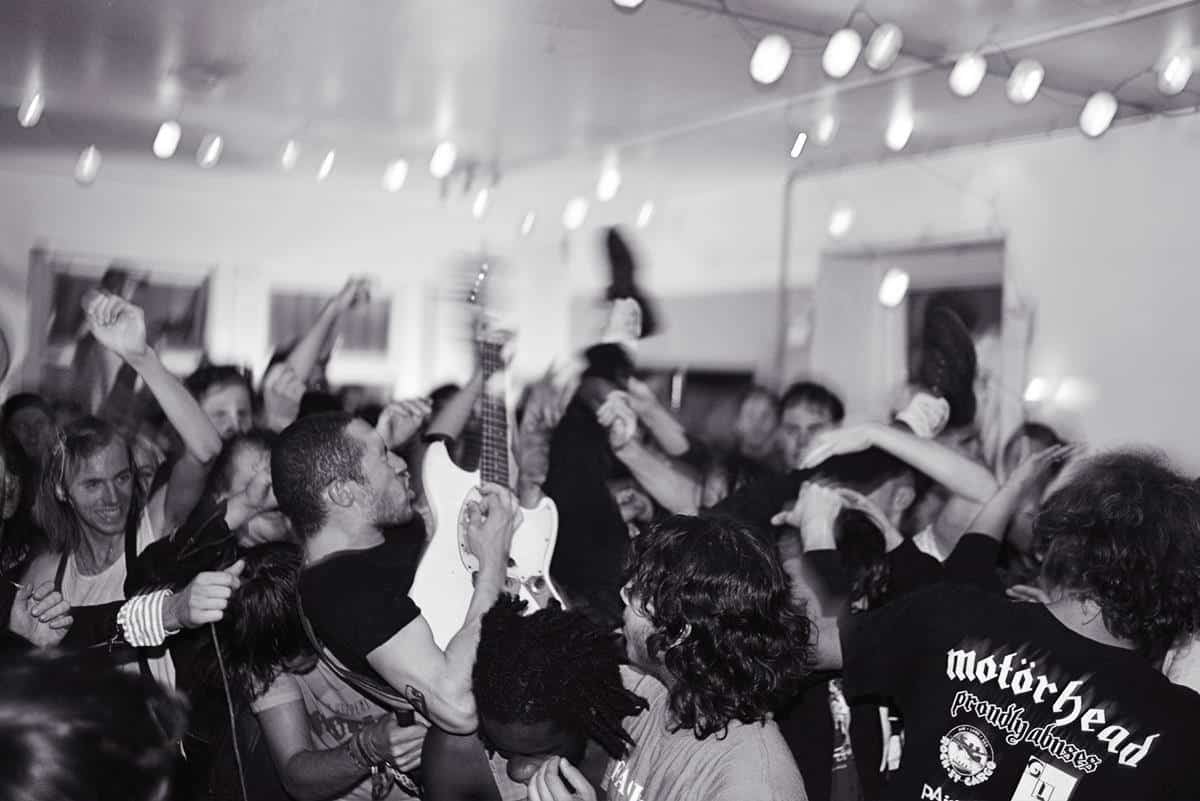
Partly in response to my personal experience, I started my own record label a couple of years after releasing my first solo release. One of the foundational ideas was to not only pursue diversity but to try and nurture a sense of openness and freedom of expression, to create a space where there were no expectations of how artists should act, look like, how much knowledge they should have or how they wish to identify. I can’t say if that has been achieved – that would be a question for the artists we have been lucky enough to work with – but on a personal level, I have learnt so much from this shift in approach, even if I still sometimes personally feel like I am in some sort of racial purgatory. I have learnt that I could divert from following a blueprint and seemingly pre-defined set of characteristics and start drawing up a new one from scratch.
My journey through punk, noise, ambient and experimental music has not given me all the answers but has allowed me to start asking the right questions, it has shown me the varying faces of creativity and how easy it is to act as if I am being creative and progressive but instead hiding within a system that has never evolved to stimulate or face the questions I had.
Read our feature on Alex Ives’ music as Specimens here.