
Created in 2020 as part of her residency at the Centre for Chinese Contemporary Art (CFCCA), A Meeting Place | 会议地点 draws on the experience of Chinese migrants who settled in and around Manchester’s Chinatown. One of Hayley Suviste’s most expansive sound pieces, it draws together many different parts of her practice, including binaural recoding, oral history and its sound walk presentation. Pooling together oral histories collected at the CFCCA, from migrants and those of Chinese heritage, the piece uses sound to describe not only the landmark events these people experienced, such as Chinese New Year celebrations, but also the minutiae of their lives – the local places that defined their move to the UK, and the barriers that came with it.
Of all her pieces, A Meeting Place is Suviste’s most tactile, inviting listeners to do the interaction and exploration for themselves. It exists as a virtual museum, a website hosting specific vignettes of sound and oral history, accompanied by particular photographs of migrant life. It was initially conceived as a sound walk, with listeners placing the piece’s descriptions of Chinatown then into the world of Chinatown now. In this version, history is paired with its environment: ‘the interviews, field recordings and music are triggered by your GPS location – you walk around Chinatown to uncover the sounds and stories of the communities who live and work there’. It’s a testament to Suviste’s emergent approach to history, the way that life is still always growing out of what came before it.
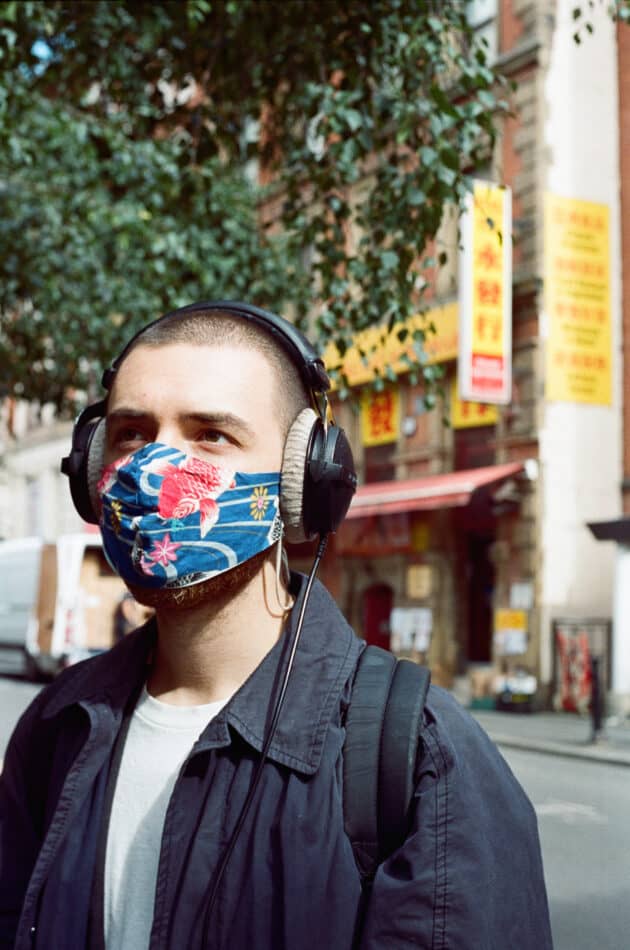
Through this serialised approach, A Meeting Place draws a more detailed picture of the interviewees, documenting the striking difference in their lives before and after moving to the UK, as well as their long-term experiences of acclimatising to a new culture. More stories are allowed to ripple out, this way, with archive clips revealing the multiplicity of migration experiences, and the different cultures and identities formed within Manchester’s Chinatown. Suviste’s work, which she describes as a ‘sonic animation’ of the archival material, is not just one case study, but a collection of them; this is reflected in the busy, multi-directional accompaniment she has made for her sound walk, in which ‘different sounds are being emitted from all directions’ around the listener’s headspace.
Read on to find out more about Suviste’s approach to making the piece. You can listen through to A Meeting Place by visiting the project’s website. Each page features its own sound piece, as well as a description of the section, photographs from the archive and descriptions of field recordings used by Suviste. You can download the sound walk version of the piece here.
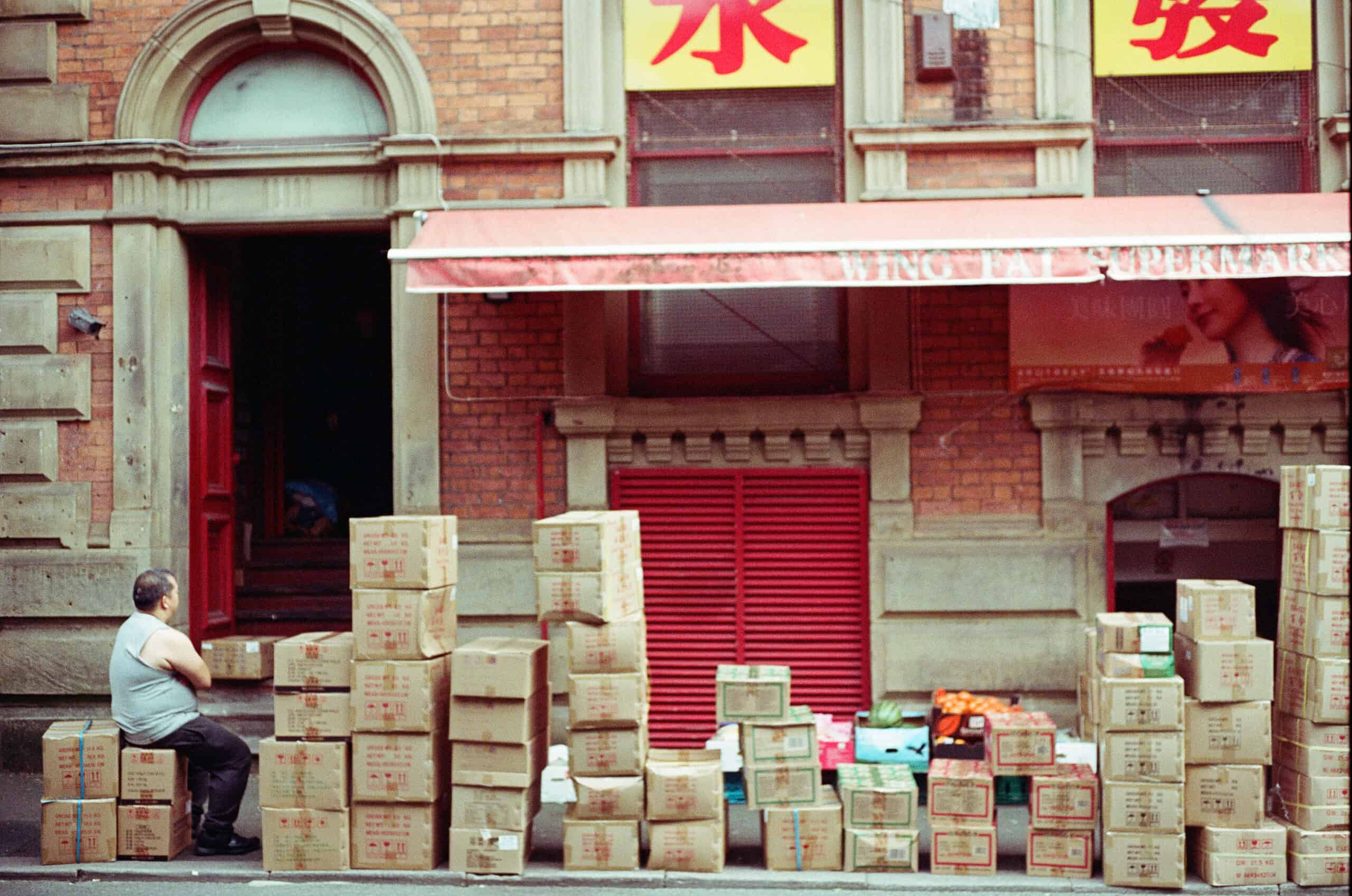
Hayley Suviste on making A Meeting Place:
Created during a library and archive residency with the Centre for Chinese Contemporary Art (CFCCA), A Meeting Place is based entirely on the oral history recordings from the CFCCA’s archive. Whilst listening through to the interviews, I took notes on the different themes and then weaved the interviews together into a narrative. Based on the interviews, I visited sites around Manchester to make field recordings of the specific places that they talk about.
I spent a few days collecting the sounds of Manchester’s Chinatown – exploring the streets, shops, restaurants, back alleys and finding hidden sonic gems. I also used field recordings from online archives, so I could include ambiences from events such as Chinese New Year and recordings of traditional Chinese instruments and songs to use in the work. The ambient music that provides a backdrop to the interviews, is made from a variety of improvisations on my synths along to the interviews and field recordings – using traditional Chinese scales as a basis.
This residency was initially meant to be held onsite at the CFCCA, and I was going to create an immersive installation with surround sound and visual projections. However, the project had to be adapted for an online residency due to Covid. Therefore, I decided to create an audio-locative soundwalk, as it can be experienced in Covid safe conditions.
I think the project actually ended up being more effective as an audio-locative soundwalk, because it really makes you take your time whilst walking the streets of Chinatown. It might usually be a place that you pass through without a second thought, but the soundwalk makes you slow down and engage with the stories and histories of your surrounding environment.