
In Hayley Suviste’s music, you can listen to history. You can hear the sounds once heard in the corner of a city where someone once worked, and the songs they sang to keep themselves company on the job. You’ll be introduced to old ecologies, busy with industrial chime and clatter. You’ll witness the noise of transition, of spaces being irrevocably transformed from places of birdsong and greenspace to mixed sprawls of urban and natural life. An artist who works across field recordings, archival sound and oral history, Suviste’s work shows us not only what our local environments used to be like, but how entangled they are with their past, not moving on from history but living it out continuously.
There’s one incredible moment, buried in Suviste’s demo for her sound walk Way Down to Pomona, that says it all. The piece, which Suviste describes as ‘an immersive re-imagining of Pomona Island’s history’, is as peaceful as it is overwhelming. It juxtaposes quiet, isolated moments spent on the Manchester dockside with ones that are almost unbearably loud, documenting the island’s destruction from an explosion that occurred in a chemical factory in 1987. Now an ‘urban oasis’, Suviste’s piece echoes out Pomona’s metal and gravel spaces, using resonant sounds to capture the green spots and wildlife that have cropped up in its ruins. One moment stands out, though: an intense wall of noise, building as if it were about to blow up, plays out to a visual of a dandelion, swaying in the wind. History and nature; us and it.
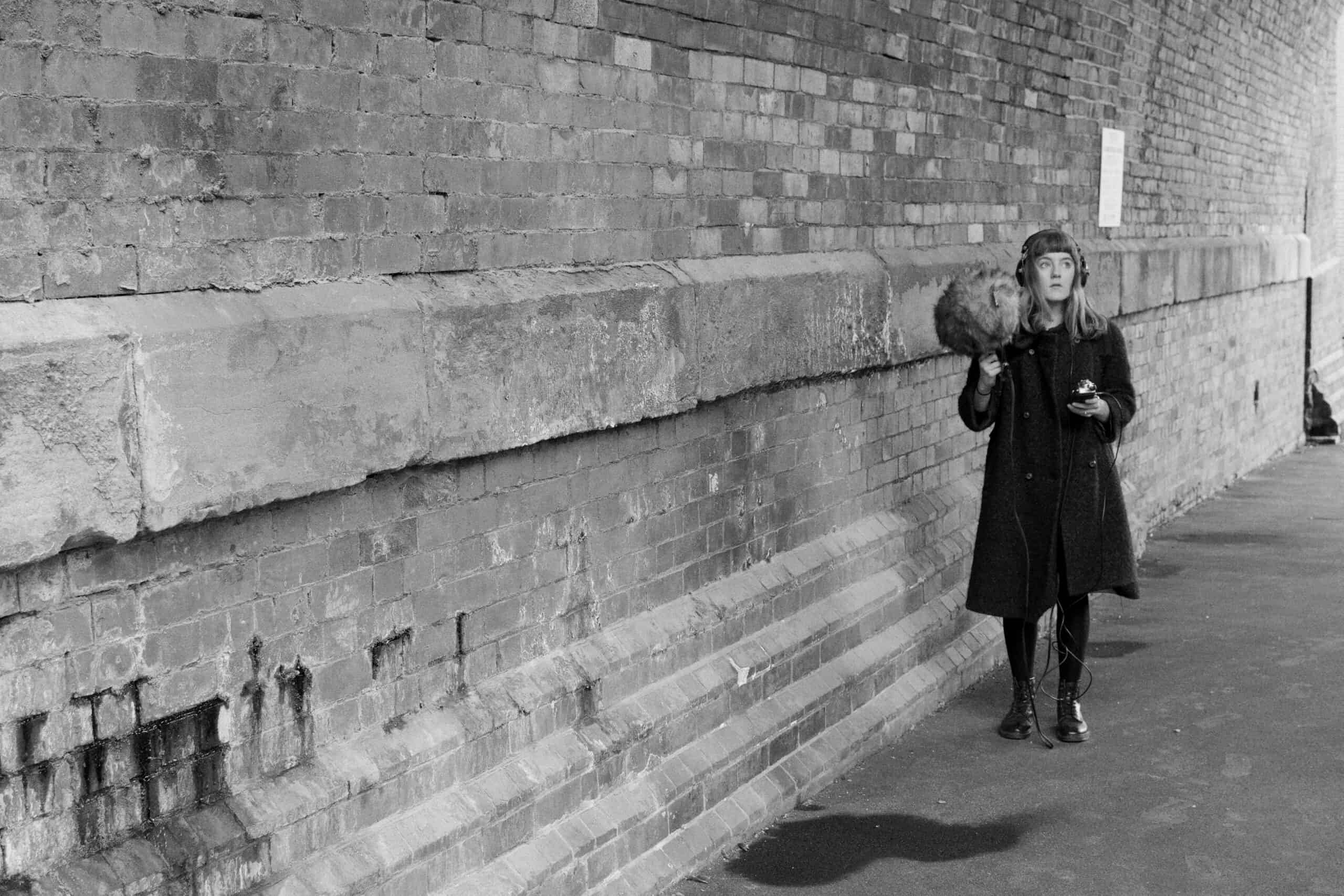
There’s foolishness in saying that someone’s music is different from everyone else’s, but I have to, because Suviste’s music is a strange one. It doesn’t really sit in close proximity with other kinds of contemporary sound, and Suviste herself has found it hard coming to terms with the idea of being a ‘composer’. She laughs and likens her music to ‘podcasts’ when asked about it, which isn’t bad, actually; it describes the production of her pieces, so well put together that they really just feel like the environments she’s collected sound from. But it’s probably more about her subject material, and how it extends outwards to other experiences. Few other sound-makers foreground conversation and natural sound so significantly, linking up where it comes from and what communities come into contact with it. Few other artists are so keen to give other people the floor, to speak for themselves, to the extent Suviste does.
Suviste’s music began as a looser thing, with a more exploratory and homespun approach. She describes it as being more ‘abstract’, back then, a product of experimenting with process. There was less location to what she did, with much of the sound she recorded becoming estranged from its environment through manipulation. She came to expand her definition of composing, finding that these processes were less the story and more a way of telling it. Now, she thinks in narratives, with recent commissions sparked from bigger discussions of identity and community, paying close attention to where sounds have come from and how they interact with one another. She’s started to make use of voices, too, using first-hand accounts of people as they interact with their cities.
Suviste admits that the way she made music confuses her now: ‘As time went on I became bored of that, and I wasn’t really inspired by it. Since then I haven’t really done anything that isn’t narratively structured’. There are moments that have been more free-reign, such as last year’s found around, commissioned by Seed Studios Trafford as an expression of lockdown listening. ‘I had no idea what I was doing!’, Suviste jokes. Listening to the piece, it feels like a cathartic mesh of her work, as if clashing all possible materials into one big bang. Though her pieces have become more focused, closed case studies on ecosystems and city spots, she still plays around with sound in this way: her 2019 piece Lōka, for instance, is moulded from abstract sound, Suviste improvising her way to her preferred arrangements, finding the structural integrity along the way.
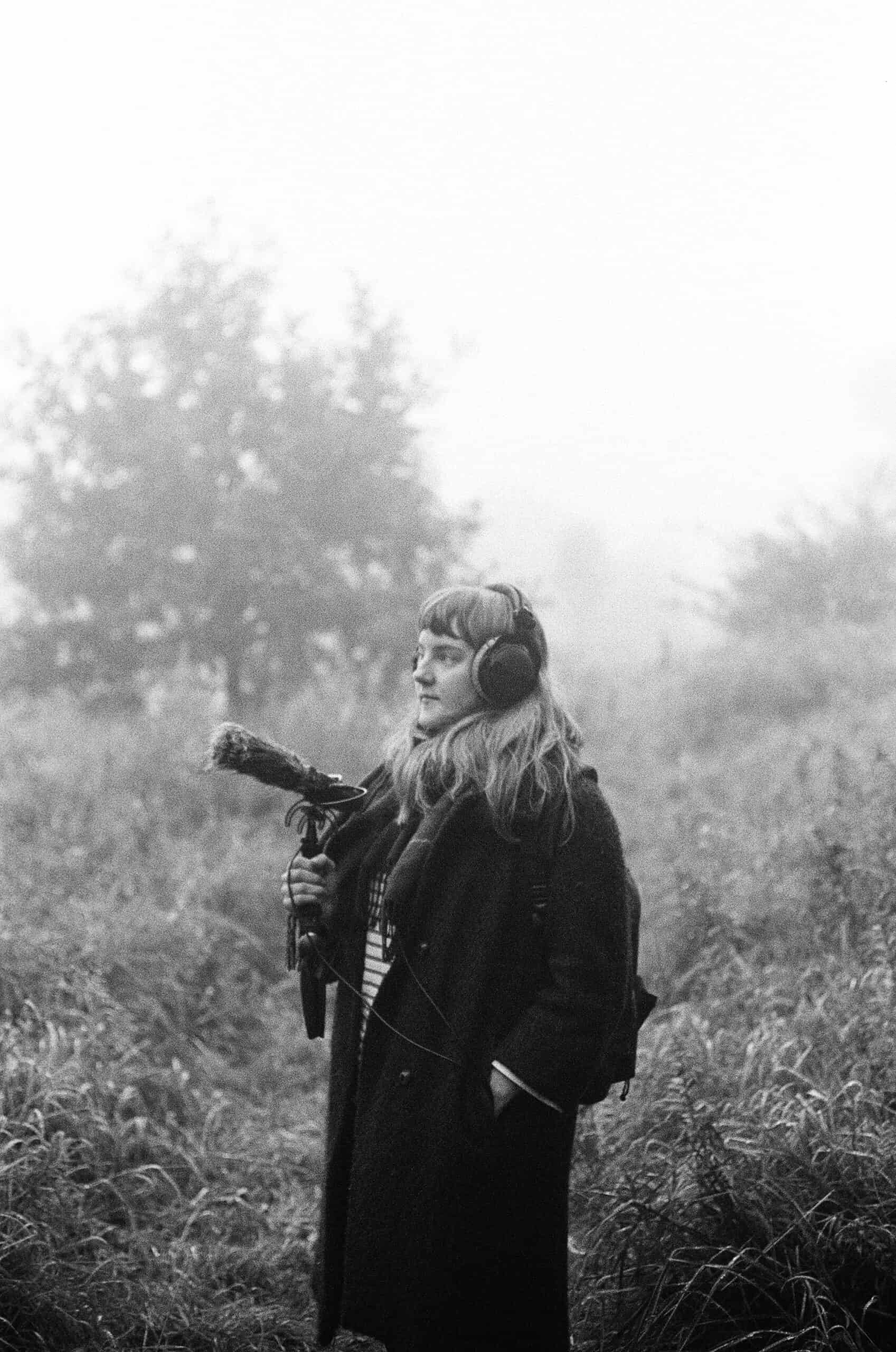
The stories Suviste tells are built into the way she composes and produces her music. Through use of binaural surround sound and an ongoing emphasis on headphone listening, she’s able to pull different sounds together into a collective. She makes pieces about communities, industries, and environments; through her soundmaking, she gives these worlds their proper dimensions. Artists often talk about ‘space’, but Suviste’s work is fascinating for what permeates it. Lōka focuses on the Bengali and Indian immigrants who worked in factories throughout 1950s Britain. The piece is full of specific moments that feel interconnected, a sound that lives next door to another, or upstairs from one below. Conversations from workers feel placed in specific rooms, the percussive churn of a heavy machine playing out feverishly as one woman recounts coming to after suffering an injury on the job.
Suviste is local to Manchester, and has written a lot of pieces about it: as well as the factories of Lōka, she’s documented the modern sounds of Chorlton (Binaural Snapshot), created a history-tracing soundwalk for the docks of Pomona (Way Down to Panoma) and created aural accompaniments to the city’s Chinatown (A Meeting Place), placing sounds from the area’s past into the present day. She also co-runs a soundwalk collective, The Manchester Ear, with Ryan Woods, introducing participants to the sound of their local ecologies. Her work gives voice to the lives that have filled up the city through the years, and the very real things that have gone with its history; both family and poverty are central to pieces such as In Those Days.
That people exist at all in Suviste’s spaces is a decision. A lot of artists choose not to record that. But nature is in a feedback loop with people, and for Suviste, it’s important both are accounted for. ‘A lot of people with field recordings want to block out sound and make these perfect nature bird-songs, but I think to include sounds in cities is important. You can hear politics in it.’ Pieces like Lōka and A Meeting Place, which document the ways in which societies have been formed and shaped through years of migration, are very rare things. They go into environments and map out the emotional contours that have been built on them. We hear the sounds that live on in the mind of people who worked in the factories of Lōka, and the ones that existed in the Chinatown migrants settled in A Meeting Place.

Though Manchester has been Suviste’s subject for a long time, she’s only now started to explore her own relationship with the city. With Edgeland, her hcmf// 2020 commission, she created something more personal. The piece captures the natural sounds of Ryebank Fields, a threatened green space that will almost inevitably be sold out and developed over in the near future. Ryebank is Suviste’s local walking spot, and the place she’s spent most of her time during lockdown. It is, like many of Suviste’s subjects, a place on the periphery of urban and rural life, feeling the discord that comes with the march of progress. Through conversations about the spot, and sounds collected around it, Edgeland gives voice to the miniscule green space of a big city, echoing out the quiet within and the buzz beyond. The final sound of the piece is a mashup of the two: a beautifully captured moment in which kids chat and birds chirp, in a kind of harmony.
Usually, a piece like this would involve Suviste making a kind of sound diorama, with her on the outside. She’d record the local sounds, interview members of the local community and create a sound bank to go in tow with it. Those things are there in Edgeland, and they’re prominent, but so is Suviste herself. Lilting in the back of the piece, she’s doing songwriting: sombre and uncertain melodies, played on a synth, are enveloping the piece, not only soundtracking it but giving it an emotional response. ‘That comes from me being so connected to Ryebank Fields, and involved in its preservation’. Throughout Edgeland, Suviste has something to say about her city, and what it means to see parts of it disappear. Perhaps what Suviste is offering, with this intervention, is a lament. Though she talks with activists taking the fight to the capitalist destruction of Ryebank, the piece sounds weary. ‘If nothing else’, she says, ‘this project documents its final days’.
There’s another subtle reason for Edgeland sounding different, and it’s just that Suviste has new instruments. ‘This year is when I got my first synths’, she says. ‘Before then I was making things with pure recordings of sound, so this year it’s been fun to have instruments, and to improvise with them.’ Edgeland is actually a rare example of Suviste playing the music, creating something she can give to the environment she’s writing a piece for. ‘There’s something more personal about playing with an instrument I think. And with Edgeland, many of the sounds you hear are similar to the stuff I listen to. So that kind of thing happened’.
Check back on Thursday 11 February to hear Hayley Suviste’s hcmf// 2020 commission Edgeland.